From November, the Class 10 board exam is roughly 100 days away. With the syllabus nearly finished, this is when scores are really made. Here is a practical, phase-by-phase plan for CBSE and ICSE students to peak on exam day.
The plan at a glance
- November: close syllabus gaps and complete one full revision.
- December: full-length papers, one subject at a time, under timed conditions.
- January: pre-boards, mixed papers and an error notebook.
- February: light revision, formulas and diagrams, sleep and confidence.
Phase 1 (November): finish, then revise once
- List every chapter in every subject and mark it green (confident), yellow (needs practice) or red (not done).
- Clear all red chapters first. Ask teachers for help early rather than skipping them.
- Complete one full revision of each subject from the textbook: NCERT for CBSE, prescribed books for ICSE.
- Start a formula and definitions sheet for Maths and Science.
Phase 2 (December): full papers, subject by subject
- Write at least two full-length papers per main subject in the board’s time limit.
- Check each paper against the official marking scheme, or have a teacher correct it.
- Practise presentation: steps in Maths, labelled diagrams in Science, point-wise answers in Social Science.
- Use previous years’ board questions; they show exactly what examiners ask.
Phase 3 (January): pre-boards and mistakes
- Treat school pre-boards as the real exam: same timing, same rules, no notes.
- Keep an error notebook: every mistake, why it happened and the correct method.
- Alternate subjects day by day so nothing goes cold.
- Revise weak chapters again, guided by your error notebook.
Phase 4 (February): sharpen, do not cram
- Revise from your own notes, formula sheets and error notebook, not new books.
- Do one or two final timed papers per subject, then stop adding new material.
- Sleep at least 7 to 8 hours. A rested brain recalls far better.
- Check the date sheet, admit card and exam-centre route in advance.
CBSE Class 10 dates for 2027
CBSE released the 2027 date sheet on 6 November 2026. The main Class 10 exam runs from 16 February to 9 March 2027, with papers starting at 10:30 am: Mathematics on 17 February, Science on 22 February, English on 26 February, Hindi on 3 March and Social Science on 8 March. Build your revision around these gaps (see the full CBSE date sheet 2027 and revision plan), and confirm the final schedule on cbse.gov.in. ICSE students should follow the CISCE timetable on cisce.org once it is released.
Exam-day tips
- Use the reading time to plan which questions to attempt first.
- Attempt every question; step marks and partial answers add up.
- Leave 10 minutes at the end to check calculations and labels.
How UT students follow this plan
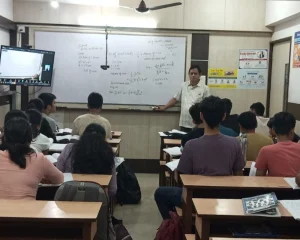
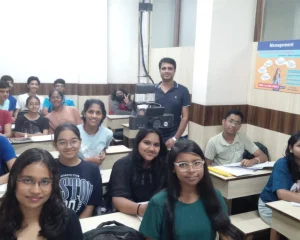
At Universal Tutorials, the Class 10 program is designed around exactly this timeline. The full syllabus is finished by October, and from November to February students write up to four sets of full-portion, board-pattern mock tests, corrected by their own teachers with model answers and a report for parents after every test. Every lecture is also recorded on YouTube, so students can revise any chapter in the final weeks.
Already preparing for board exams? Read how CBSE’s two Class 10 board exams work our plan to score 95%+ in Class 10 Maths, the CBSE Class 10 marking scheme and the ICSE Class 10 preparation timetable. You can also hear from past students in our video testimonials.
Need board-pattern mock tests?
Join UT’s Class 10 test series at a Navi Mumbai centre or online through UTudaan.
Frequently Asked Questions
How many hours should a Class 10 student study before the boards?
Quality matters more than hours. Most students do well with 5 to 7 focused hours a day in the final months, including at least one timed paper a few times a week, with proper sleep.
How many sample papers should my child solve?
Aim for at least 8 to 10 full papers per main subject before the board exam, written under timed conditions and then checked against the marking scheme.
Is it too late to improve in November?
No. November to February is the most important phase. With the syllabus finished, steady practice of full papers and correcting mistakes can raise scores significantly.
Should my child keep attending school in January and February?
Yes, unless the school says otherwise. Pre-board exams and internal assessment happen in school, and teachers often share important guidance in the final weeks.
Always check cbse.gov.in or cisce.org for the official date sheet and exam rules.